Product Details
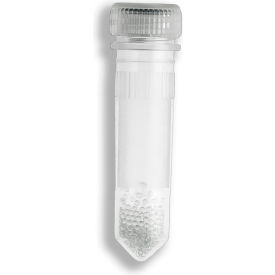
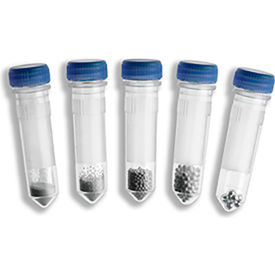
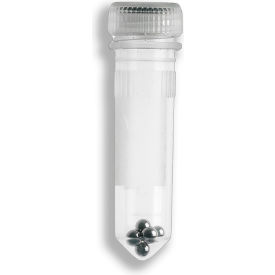
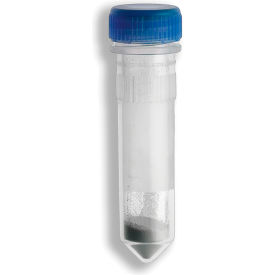
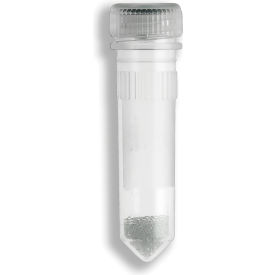
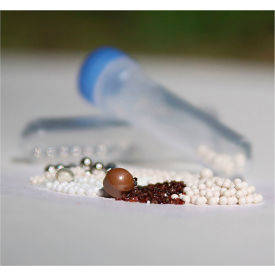
The efficiency of bead homogenization relies on several factors, including the material and size of the beads. Benchmark offers a variety of bead options to meet a wide range of samples. Silica (glass) homogenizer beads are ready to use, acid washed, and heat treated to remove contaminants and render them nuclease and protease free. The 0.1mm diameter beads are the best choice for homogenization of gram positive and negative bacteria, while 0.5mm diameter beads are used to homogenize bacteria, fungi, spores, molds, and small yeasts. The 1.0mm diameter beads can be used to homogenize fungi, spores, algae, and larger yeasts, and the 1.5mm diameter beads are suited for soft tissues such as adipose and liver, as well as small insects. For harder tissues such as heart and lung, and tumor samples, 3mm diameter beads are recommended, while the 6mm diameter satellite is ideal for very hard tissues such as seeds, dry grinding, and hair. Stainless steel homogenizer beads are available in 2.8mm and 5mm diameter sizes, providing a denser option than zirconium for the homogenization of harder samples and dry grinding. Additionally, some samples may require a mixture of beads for efficient homogenization, such as garnet shards and 6mm zirconium satellite for samples high in collagen like skin, or a combination of 0.1mm silica, 1.4mm zirconium, and 4mm silica beads for fecal samples and soils. All beads and shards are acid washed and heat treated to be nuclease free, with Triple-Pure™ zirconium homogenizer beads being certified nuclease and protease free, with their filling process tested by qPCR to be free of stray DNA.